Institute of Physics Researcher Completes Specialization in Nuclear Reactor Operation
Institute of Physics researcher, Mariella Mateo Villanueva, successfully completed her participation in the "Research Nuclear Reactor Operator Course" , a high-level program designed to guarantee the safe and efficient operation of nuclear facilities .
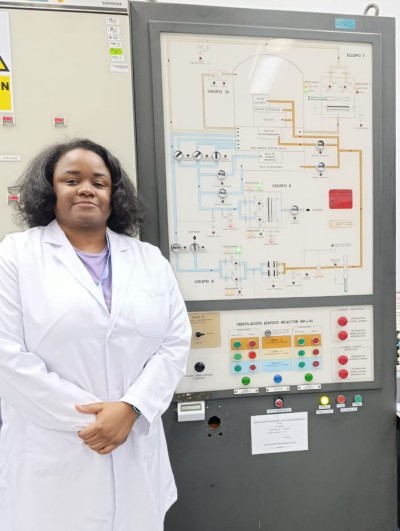
The training, which recently concluded following its practical phase at the Nuclear Center, aimed to train operators under the Systematic Approach to Training (SAT) and the guidelines of the International Atomic Energy Agency (IAEA) .
The academic program was conducted in two stages starting last September :
-
Theoretical Phase: Comprised 84 academic hours in a virtual modality, covering fundamentals of reactor physics, thermohydraulics, regulations, and radiation protection .
-
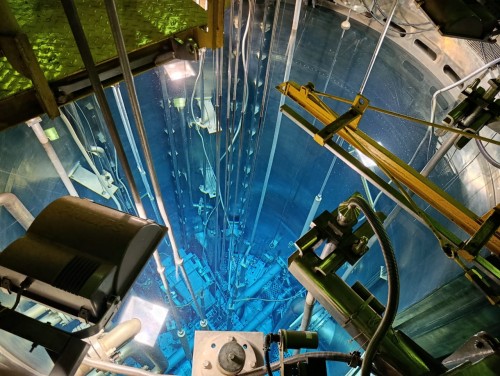
Practical Phase: Concluded last week with 48 academic hours of in-person experimental training . This included approach-to-critical maneuvers, accident analysis, and radioisotope production at the RP-10 Reactor .
With the completion of this course, the researcher has strengthened her competencies in informed decision-making and safety culture, which are key aspects for the development of nuclear technologies in the scientific field .