
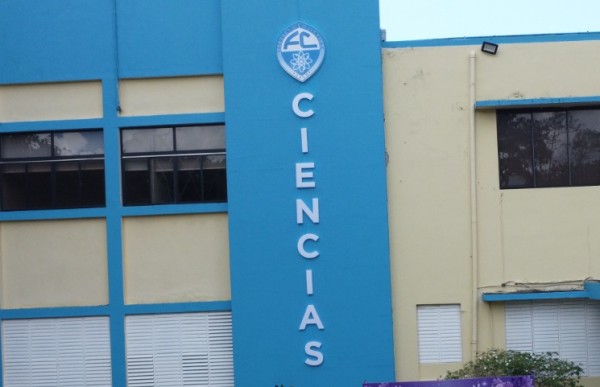
The Autonomous University of Santo Domingo (UASD) is the oldest higher education institution with the highest enrollment in the Dominican Republic. Through its faculties and institutes, the university sustains research activity ranging from formal and natural sciences to humanities, legal sciences, and engineering. From the Institute of Physics (IFIS), we are interested in understanding how this production is distributed and what our contribution is to the institutional research ecosystem. In this article, we analyze that distribution with special attention to the Faculty of Sciences (FC) and IFIS, using publicly registered research project data.
Data source: The research project records used in this analysis come from the Dominican government's open data portal, available at datos.gob.do. The data is published approximately two months after each cutoff date. The portal apparently overwrites the previous dataset when publishing the new one, so the historical snapshots used in this analysis were retrieved on their respective publication dates and remain available for download at the end of this article.
The research landscape at UASD
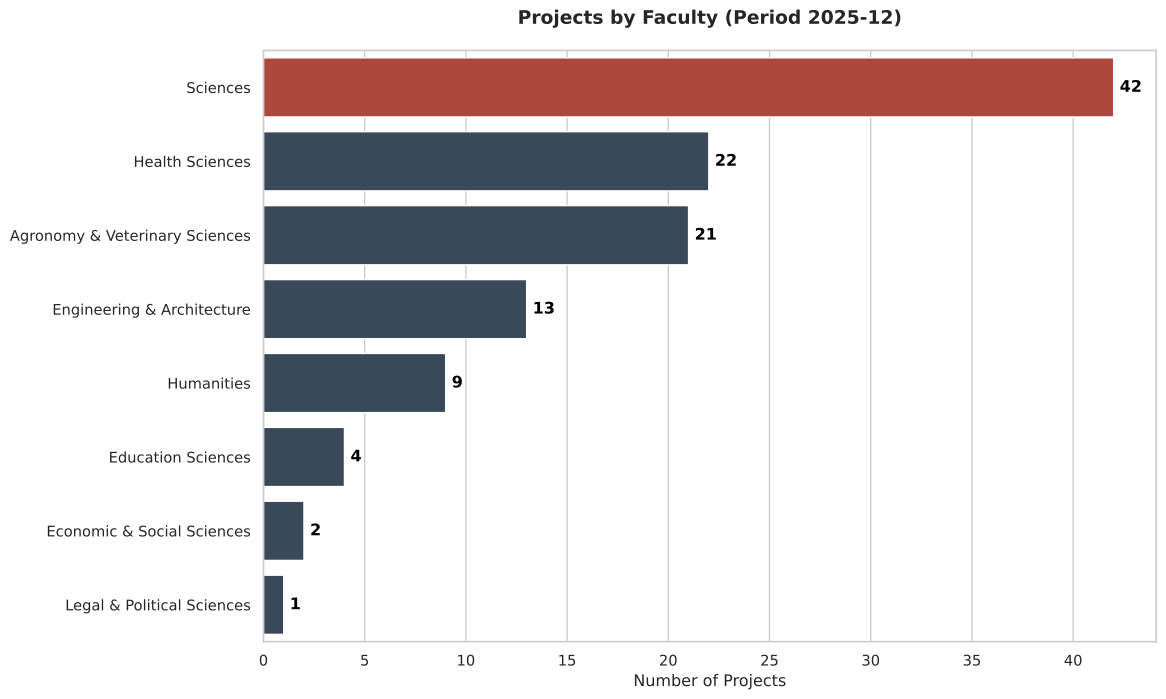
UASD had 114 active research projects at the close of December 2025, distributed across eight faculties. This figure is identical to the one recorded in December 2024, although the internal landscape shows important dynamics: over the course of the year, completed projects were closed and new ones were opened, reflecting an institution in constant motion.
The following chart shows the distribution of active projects among all faculties for December 2025:
The following table summarizes the evolution of research production by faculty across the three analyzed periods:
| Faculty | Dec 2024 | Jun 2025 | Dec 2025 |
|---|---|---|---|
| Faculty of Sciences (FC) | 41 | 41 | 42 |
| Faculty of Health Sciences (FCS) | 21 | 22 | 22 |
| Faculty of Agronomic and Veterinary Sciences (FCAV) | 20 | 24 | 21 |
| Faculty of Engineering and Architecture (FIA) | 12 | 15 | 13 |
| Faculty of Humanities (FH) | 9 | 9 | 9 |
| Faculty of Education Sciences (FCE) | 1 | 6 | 4 |
| Faculty of Economic and Social Sciences (FCES) | 4 | 2 | 2 |
| Faculty of Legal and Political Sciences (FCJP) | 6 | 1 | 1 |
| Total UASD | 114 | 120 | 114 |
The Faculty of Sciences: the pillar of university research
The Faculty of Sciences is, with sustained consistency over time, the faculty with the highest number of ongoing research projects at UASD. With 42 active projects in December 2025, it concentrates 36.8% of all institutional research activity.
This leadership is not circumstantial: the FC maintained 41 projects in both December 2024 and June 2025, demonstrating a solid and stable research base. The second faculty in this ranking is the Faculty of Health Sciences (FCS) with 22 projects (19.3%), followed by the Faculty of Agronomic and Veterinary Sciences (FCAV) with 21 projects (18.4%).
| Period | Total UASD Projects | FC Projects | FC Share |
|---|---|---|---|
| Dec 2024 | 114 | 41 | 36.0% |
| Jun 2025 | 120 | 41 | 34.2% |
| Dec 2025 | 114 | 42 | 36.8% |
The internal dynamics of the Faculty of Sciences
Beyond the total number of projects, what distinguishes the Faculty of Sciences is its dynamism: the projects are not static. Between December 2024 and June 2025, the FC closed 15 completed projects and incorporated 15 new ones, maintaining the same total number but with a significant renewal of its portfolio. Between June and December 2025, it opened 3 additional projects while closing 2.
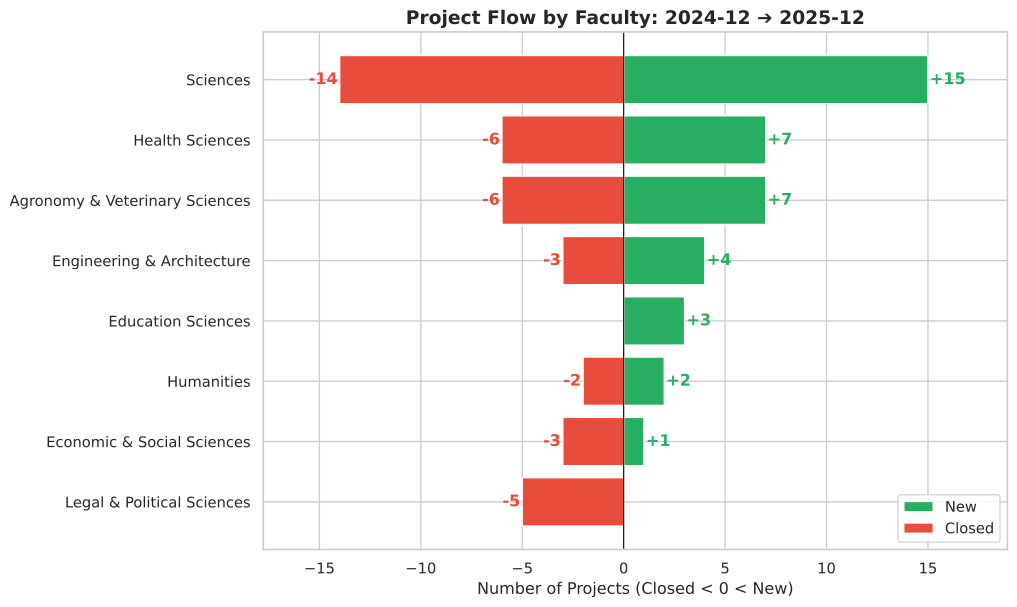
This places the FC at the forefront of the most active faculties in terms of project flow. The Faculty of Health Sciences and the Faculty of Agronomic and Veterinary Sciences also show notable dynamism, with comparable rates of project openings and closures.
Inside the Faculty of Sciences: its research institutes
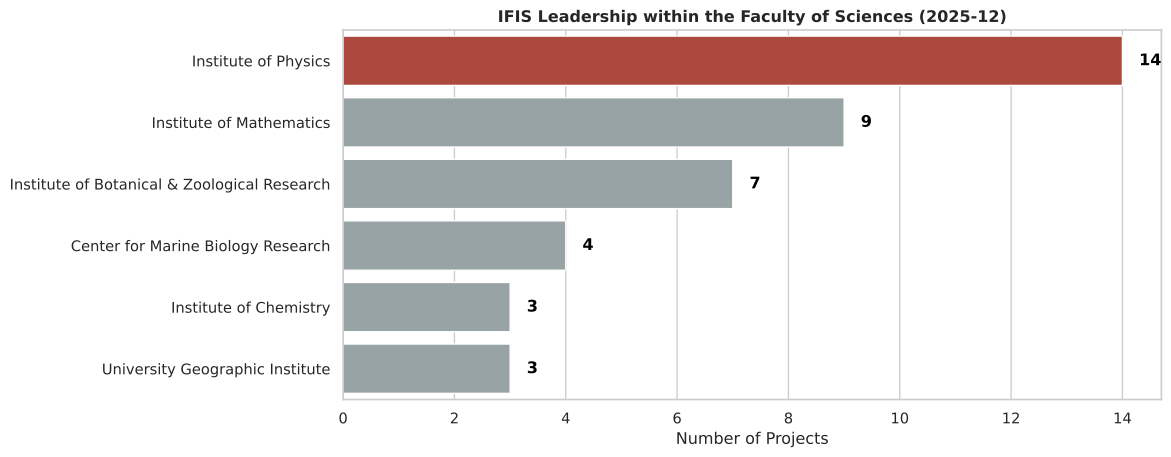
The Faculty of Sciences houses several specialized research institutes, each with its own project portfolio. The following table shows their evolution:
| Institute | Dec 2024 | Jun 2025 | Dec 2025 |
|---|---|---|---|
| Institute of Physics (IFIS) | 13 | 11 | 14 |
| Institute of Mathematics (INSMAT) | 12 | 10 | 9 |
| Botanical and Zoological Research Institute (IIBZ) | 3 | 7 | 7 |
| Center for Marine Biology Research (CIBIMA) | 3 | 4 | 4 |
| University Geographic Institute (IGU) | 3 | 3 | 3 |
| Institute of Chemistry (IQUASD) | 2 | 3 | 3 |
| University Seismological Institute (ISU) | 2 | 1 | 0 |
| Institute of Microbiology and Parasitology (IMPA) | 2 | 1 | 1 |
| School of Biology (BIO) | 0 | 1 | 1 |
It is worth highlighting the growth of the IIBZ, which more than doubled its project portfolio: it went from 3 in December 2024 to 7 in December 2025 (+133%). The IQUASD also showed growth, going from 2 to 3 projects. The INSMAT, on the other hand, experienced a reduction from 12 to 9 projects (-25%), suggesting that several projects completed their cycle.
The Institute of Physics (IFIS)
The Institute of Physics is the most productive institute within the Faculty of Sciences and ranks third in the entire UASD in terms of active projects. With 14 projects in December 2025, it represents:
- 12.3% of all university research.
- 33.3% of the Faculty of Sciences' projects.
Temporal evolution of IFIS
| Period | Total UASD | Total FC | IFIS Projects | % IFIS / UASD | % IFIS / FC |
|---|---|---|---|---|---|
| Dec 2024 | 114 | 41 | 13 | 11.4% | 31.7% |
| Jun 2025 | 120 | 41 | 11 | 9.2% | 26.8% |
| Dec 2025 | 114 | 42 | 14 | 12.3% | 33.3% |
IFIS closed 2024 with 13 projects, experienced a small contraction to 11 in June 2025 (closure of completed projects), and recovered and surpassed its historical mark by reaching 14 in December 2025, representing a net growth of +7.7% for the year.
In December 2025, 2 new projects were incorporated into IFIS that did not exist in any of the previous periods:
- DFT modeling and characterization of optical and electrical properties of two-dimensional (2D) material thin films, for the fabrication of multilayer optical devices, applied in EUV nanolithography.
- Characterization of the semiconducting properties of germanium diselenide (GeSe₂) and the topological properties of stanene (2D Sn) using artificial intelligence.
IFIS in the context of all UASD institutes
When comparing IFIS with all university institutes, its position is prominent. The following ranking corresponds to December 2025:
| # | Institute | Faculty | Projects |
|---|---|---|---|
| 1 | Health Research Institute (INSIS) | FCS | 22 |
| 2 | National Institute of Agricultural Research (INIA) | FCAV | 18 |
| 3 | Institute of Physics (IFIS) | FC | 14 |
| 4 | Institute of Mathematics (INSMAT) | FC | 9 |
| 5 | Institute of Applied Research to Engineering (IIAI) | FIA | 8 |
| 6 | Botanical and Zoological Research Institute (IIBZ) | FC | 7 |
| 7 | Institute of Philosophical Research (IIFI) | FH | 5 |
| 8 | Center for Marine Biology Research (CIBIMA) | FC | 4 |
| 9 | Institute for Educational Research and Innovation (INEDUC) | FCE | 4 |
| ... | Other 13 institutes | ≤ 3 |
The two institutes preceding IFIS—INSIS and INIA—are broad-based institutes covering all disciplines of their respective faculties (Health Sciences and Agronomic and Veterinary Sciences). In contrast, IFIS focuses exclusively on Physics, making it the most productive specialized institute at UASD.
What does the Institute of Physics research?
The IFIS project portfolio in December 2025 reflects a notable thematic diversity, ranging from theoretical and computational physics to direct applications in health, the environment, and education:
Materials and nanotechnology:
- Thermoconductive properties of multilayer graphene structures
- Durability and reproducibility studies of micro/nanosensors embedded in concrete for structural monitoring
- Smart materials in structural health monitoring of civil and transport infrastructures
- DFT modeling and characterization of optical and electrical properties of two-dimensional (2D) material thin films applied in EUV nanolithography (new in 2025-12)
- Characterization of the semiconducting properties of germanium diselenide (GeSe₂) and stanene (Sn) using artificial intelligence (new in 2025-12)
Statistical physics and computational simulation:
- Adsorption kinetics, surface migration, and saturation properties from semi-rigid dimers in equilibrium multilayers
- Deposition of flexible films in multilayers: percolation, growth kinetics, roughness, and saturation
- Adsorption of pure polyatomic molecules and their mixtures on solid surfaces: theory and Monte Carlo simulation
Physics applied to health and the environment:
- Study of thermoluminescent dosimeters from new materials for services in the health sector
- Electrical bioimpedance in cancer patients
- Air pollution by heavy metals and radionuclides in atmospheric aerosols in urban areas (National District)
- Evaluation of heavy metals in air, soil, and sediments in areas adjacent to the Punta Catalina thermoelectric plant, Baní
Physics Education Research:
- Preconceptions of Kinematics and Newton's Laws in Science and Engineering Students
- Improving Physics teaching in Latin America through Machine Learning and the PISA Database
- Flipped classroom as an innovation in Physics teaching at UASD (San Francisco de Macorís Campus and Main Campus)
Conclusions
The analysis of UASD's research project data reveals a diverse and active university ecosystem. Several findings are worth highlighting:
-
The Faculty of Sciences consistently leads UASD's research production, concentrating more than a third of all active projects in the three analyzed periods.
-
The dynamics of renewal is a distinguishing feature of the FC: it not only maintains a high volume of projects but actively renews them with new openings and cycle closures.
-
The Institute of Physics (IFIS) is the most productive specialized institute in the university. Its position as third in the overall ranking—surpassing more than 20 institutes from various disciplines—is a reflection of the solidity of its research community.
-
The growth of IIBZ (from 3 to 7 projects in a year) and the sustained activity of CIBIMA, IGU, and IQUASD reflect that the vibrant ecosystem of the Faculty of Sciences is driven by the collective effort of multiple institutes, not just one.
-
The thematic diversity of IFIS—covering everything from theoretical physics and computational simulation to medical, environmental, and educational applications—shows the transversality of the discipline as a tool at the service of Dominican society.
Data for download
The CSV files with the complete records of UASD research projects are available for download. Each file corresponds to the data exactly as it was retrieved from the open data portal on the indicated date:
| Cutoff period | Retrieval date | File |
|---|---|---|
| December 2025 | February 2026 | 2025-12.csv |
| June 2025 | August 2025 | 2025-06.csv |
| December 2024 | February 2025 | 2024-12.csv |
Data: Open Data Portal of the Dominican Government — datos.gob.do. Own analysis of UASD research project records (December 2024, June 2025, December 2025).